Araticum-liso
Annona coriacea · Annonaceae family
A Cerrado Annona eaten fresh and in desserts, with an interesting relationship with its beetle pollinators.
Find it near DetroitGet to know it
Araticum-liso is a fragrant fruit from Brazil’s Cerrado, with sweet, juicy flesh and a flavour like custard apple. It becomes so soft when ripe that a squeeze can split it open. In Brazil, the pulp goes into juice, ice cream and marolo cake.
What it is
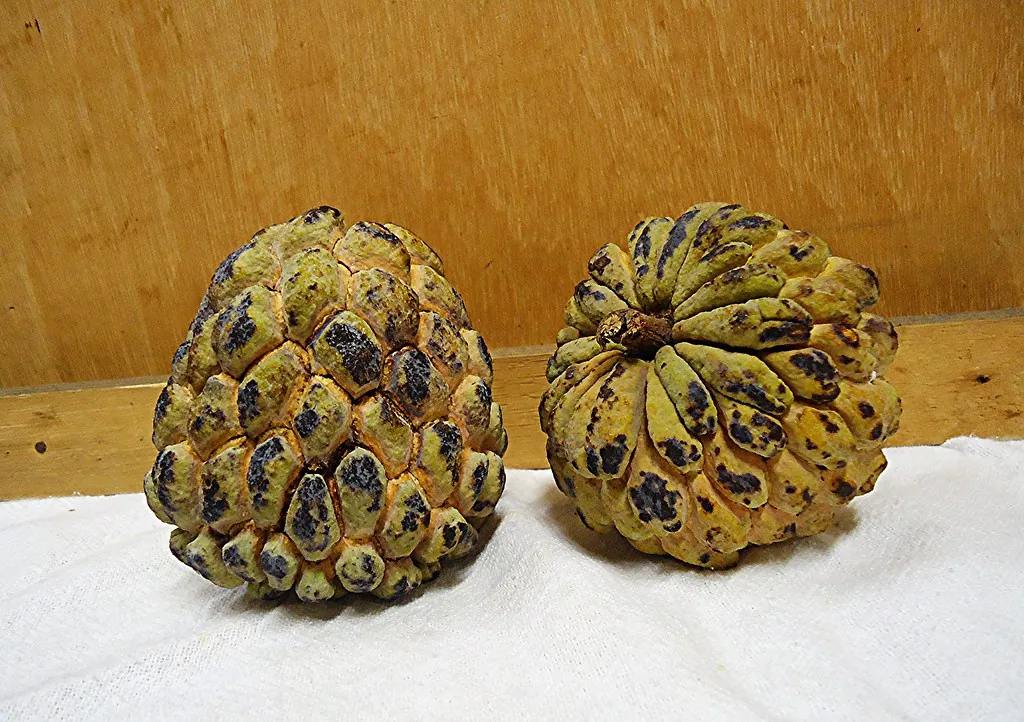
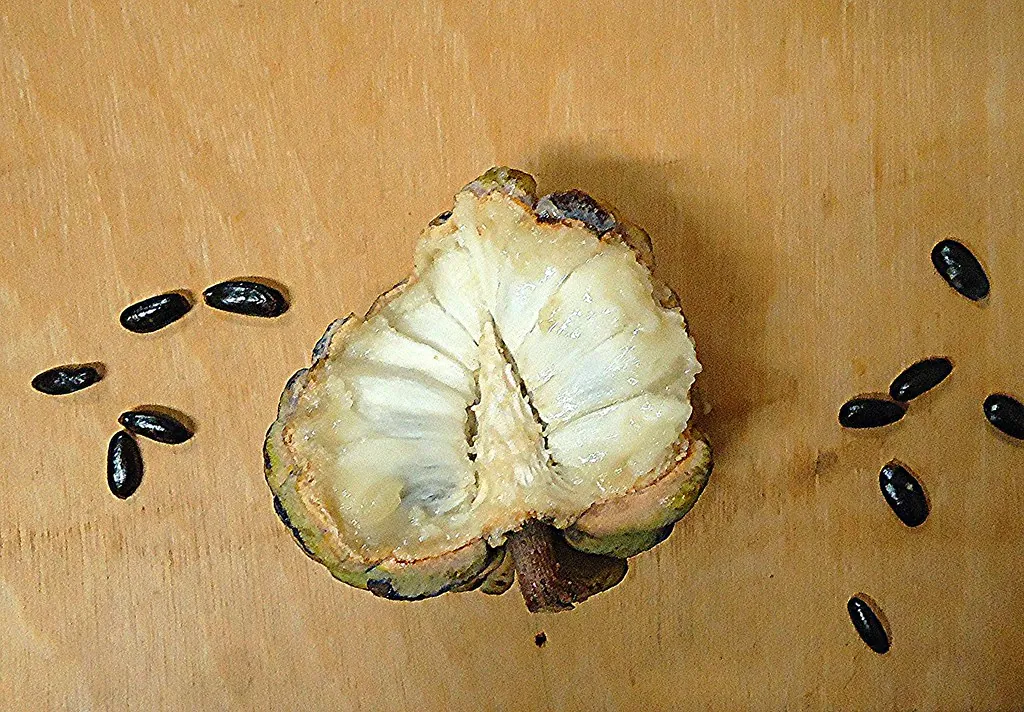
The fruit, Annona coriacea, is roughly egg-shaped with a blunt end and can reach 25 cm (10 in) long. Its flesh is juicy but fibrous, with a strong fragrance and pronounced sweetness. A ripe araticum-liso gives way under your fingers; pressure can break it apart.
Where it comes from
Araticum-liso is native to Brazil’s Cerrado, growing in open, grassy country and sometimes in denser woodland. Its range includes Bahia, Minas Gerais, Goiás, Mato Grosso, Mato Grosso do Sul and São Paulo.
It also goes by marolo and araticum. The name araticum covers several Annona fruits, so Annona coriacea is the name that identifies this one.
How it's eaten where it grows
In Brazil, bolo de marolo turns the pulp into a cake baked in a ring tin. Eggs, oil and marolo are blended together, mixed with the dry ingredients, then poured into the tin.
Across the Cerrado and Pantanal food repertoire, the pulp is eaten fresh or made into juice, fruit sweets, jellies, liqueurs, pies and ice cream.
How it's grown
Araticum-liso grows as a shrub or small tree, 3–6 m (10–20 ft) tall. It suits a sunny place with sandy soil that drains freely, and can grow in poor soil. It grows slowly, and only a small share of its seeds germinate.
Its fruit feeds native wildlife as well as people. That, and its tolerance of poor soil, make it a good tree for replanting degraded land.
When and where you'll find it
In Brazil, araticum-liso grows in home orchards and is sold as fresh fruit. It is also gathered from the wild for local use. Fresh fruit is fragile once soft; separated pulp can be frozen for later use. That frozen pulp goes into mousses, ice cream, puddings and cakes.
Sources · 6
- Colecionando Frutascolecionandofrutas.com.br
- Costa et al., PLOS ONE (2017)journals.plos.org
- Paulino-Neto, Revista Brasileira de Fruticultura (2014)scielo.br
- Universidade Federal de Alfenasunifal-mg.edu.br
- Universidade Federal de Mato Grosso do Sulsabores.ufms.br
- Useful Tropical Plantstropical.theferns.info
Get it near Detroit
Sell fruit online? Add your business
What it tastes like
Araticum-liso is fragrant, with a flavor compared to custard apple (Annona reticulata).
The flesh is fleshy and appreciated by local people, and it's also eaten by native wildlife.
Choose, eat
1ChooseSplits when pressed
Look for
- Splits when pressed
Ripe fruit softens enough to split when pressed. Handle mature fruit gently.
2EatPulp · not seeds
Eat
PulpNot eaten
SeedsThe pulp is eaten fresh or used in sweets, jellies, drinks, liqueurs, pies and ice cream. The seeds aren't eaten.
Detroit, Michigan
When it’s good here
Season not documented for Michigan.
Cook it
Recipes 1
Strange but trueScienceNature
Sources
Sources
Araticum-liso · Fruitopia · checked Sep 23, 2026
- alanrevista.org /storage/articles/4386/art-14.pdf
- colecionandofrutas.com.br /annonacoriacea.htm
- flickr.com /photos/mauroescritor/12394360624/
- flickr.com /photos/mauroescritor/12397557685/
- pmc.ncbi.nlm.nih.gov /articles/PMC5289549
- pt.wikibooks.org /wiki/Livro_de_receitas/Licor_de_araticum
- receitasderoceiros.blogspot.com /2026/07/receitas-com-araticum.html
- sabores.ufms.br /indice-de-frutos/araticum/
- sitiodamata.com.br /marolo-annona-coriacea
- unifal-mg.edu.br /agriculturaurbana/marolo-liso/
- wagneroliveiragoias.blogspot.com /2012/03/goias-tem-de-importar-o-araticum-do.html