Araticum
Annona crassiflora · Annonaceae family
A Cerrado Annona whose food record centers on its sweet pulp.
Find it near DetroitGet to know it
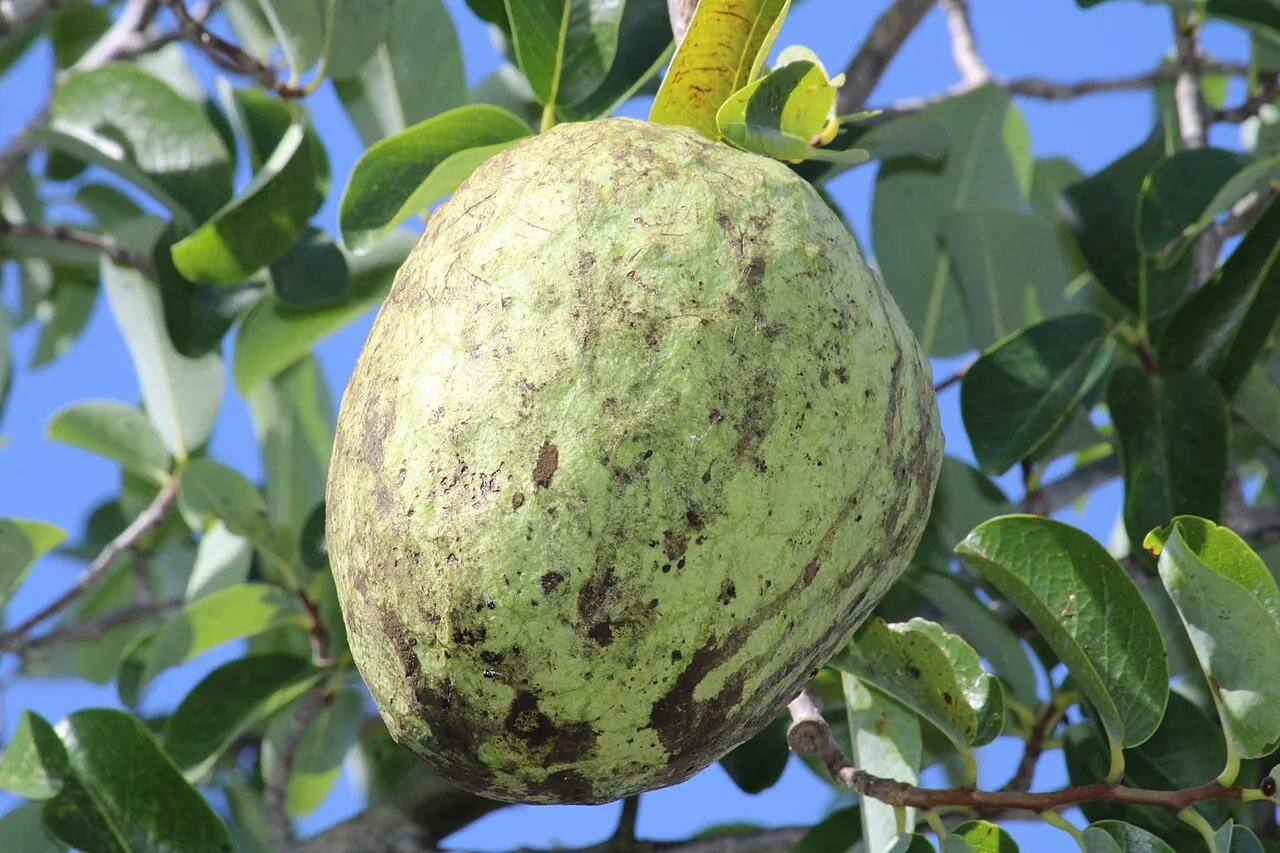
Araticum, also called marolo, is a large brown fruit from Brazil’s Cerrado with sweet, fragrant pulp. A single fruit can weigh up to 2 kg (4.4 lb). Inside, the flesh comes away in segments around numerous dark seeds, ready for eating fresh or turning into frozen desserts.
What it is
This araticum is Annona crassiflora, a member of the custard-apple family. The round to oval fruit is about 15 cm (6 in) across, with a light brown outside and many dark brown seeds. Its pulp is creamy yellow or pinkish, with a strong flavour and a pleasant perfume.
The two colours eat differently. Pink-fleshed fruit is softer and sweeter; the paler yellow kind is sharper and firmer. The edible flesh covers the seeds and is scraped away from them before cooking.
Where it comes from
Araticum belongs to Brazil’s Cerrado, where marolo and araticum do Cerrado are two names for the same fruit. Most of the fruit people eat comes from wild trees. Collectors sell it in neighbourhood markets, from street stalls and in some fruit shops, while small food businesses turn it into sweets and ice cream.
How it's eaten where it grows
In Brazil the pulp goes into pudim, a pudding of pulp, milk, condensed milk and eggs, baked in a caramel-lined mould and served cold. It also goes into cakes, jams, yoghurt, sorbet, juice and liqueurs.
For araticum cupcakes, a jam of pulp, sugar and lemon or lime juice is cooked for about 40 minutes, then a spoonful is folded into each cup of vanilla batter before baking. The pulp is also eaten raw.
How it's grown
The tree reaches about 4–8 m (13–26 ft), with a crooked trunk and rough, corky bark. It tolerates the acidic soils of the Cerrado and grows in deep ground that drains well. Starting a new tree takes patience: its seeds can wait about 200 days before they begin to sprout, even in a nursery.
When and where you'll find it
In the Cerrado, araticum usually ripens from February to April. Fresh fruit is sold in neighbourhood markets, by street sellers and in some fruit shops.
Ripe fruit that falls cracks open and spoils quickly, so pickers take fruit from the tree once its skin starts to open and let it finish ripening whole. The separated pulp keeps in the freezer in plastic bags, and after a year it still has the same flavour and colour.
Sources · 5
- Biodiversity for Food and Nutritionb4fn.org
- Biodiversity for Food and Nutrition, BFN Brazilb4fn.org
- Embrapa Cerrados, Aproveitamento Alimentar: Araticum (2004)infoteca.cnptia.embrapa.br
- Embrapa, Plantas para o Futuro: Região Centro-Oeste (2018)alice.cnptia.embrapa.br
- Oliveira et al., Journal of Food Science and Technology (2022)pmc.ncbi.nlm.nih.gov
Get it near Detroit
What it tastes like
Araticum has sweet pulp, eaten raw and used in desserts.
The pulp is sweet.
Choose, eat
1ChooseOpen fruit segments
Look for
- Open fruit segments
- Detaches easily from plant
- Still firm
Harvest-ready, still-firm araticum has more open fruit segments and detaches easily from the plant. Fruit picked too early may not ripen properly, so choose intact fruit and handle it gently.
2EatPulp · not peel, seeds
Eat
PulpNot eaten
PeelSeedsSeparate the pulp from the peel and seeds before blending — by hand, sieve or pulper. Don't blend it with the seeds in, since they can break into the pulp.
Detroit, Michigan
When it’s good hereUsual monthsJust arrivedAt their bestLast chanceAll yearWhere it is in its usual monthsToday, Oct 22Grown hereIn season in your stateShips fromIn season where it grows
6 names in 5 languages
- maroloroot
Cook it
Sources
Photos · 1
Sources
Araticum · Fruitopia · checked Oct 2, 2026